
Archives from Abroad: Exploring Yangon's Abandoned Amusement Park

At the beginning of 2020, before COVID and the 2021 military coup in Myanmar, my wife and I visited Yangon, the largest and most populous city in the country. Exploring the city was a fascinating blend of colonial-era buildings, back alleys with unique street art, neighborhoods of poor infrastructure, ancient Buddhist pagodas, and tea shops at almost every corner.
We lived in Thailand at the time, Myanmar’s (formerly Burma) historical rival, and a good amount of the culture was familiar. The food was similar, but different. The Buddhism and the architecture as well. But while researching the trip, I came across something I had never seen while traveling around Thailand.
North of the central city, near the Yangon Zoo and Kandawgyi Lake, there is (or was?) an abandoned amusement park fenced off from any and all visitors.
The Calculated Origin of a Forgotten Fairground
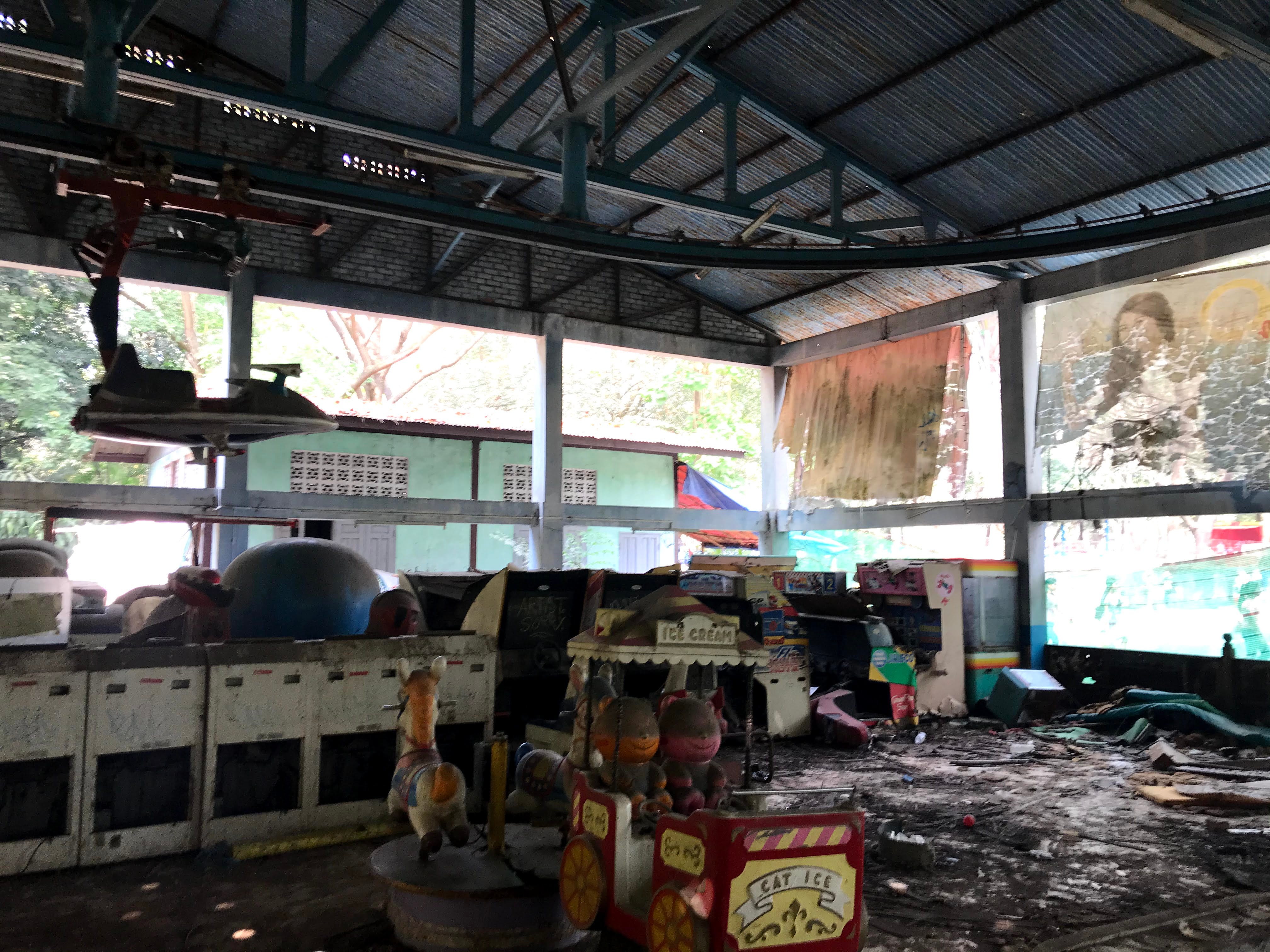
Based on my research, here’s what little I found before we went. Originally opened in 1997 by the then-ruling military junta, it seems to have been built to distract citizens from the brutal dictatorship in power.
As the government violently suppressed uprisings outside the city, something was needed to divert the attention of those living within the capital. As far as I can tell, the park continued operation until around 2012 or 2013. There are pictures on Getty Images from as recent as 2009, when it was still opened and local Burmese were celebrating the New Year.
The closure of the park is shrouded in mystery, with rumors ranging from financial problems to hauntings, from murders to political bickering. Either way, the park was abandoned with a fence put up and everything inside left to decay.
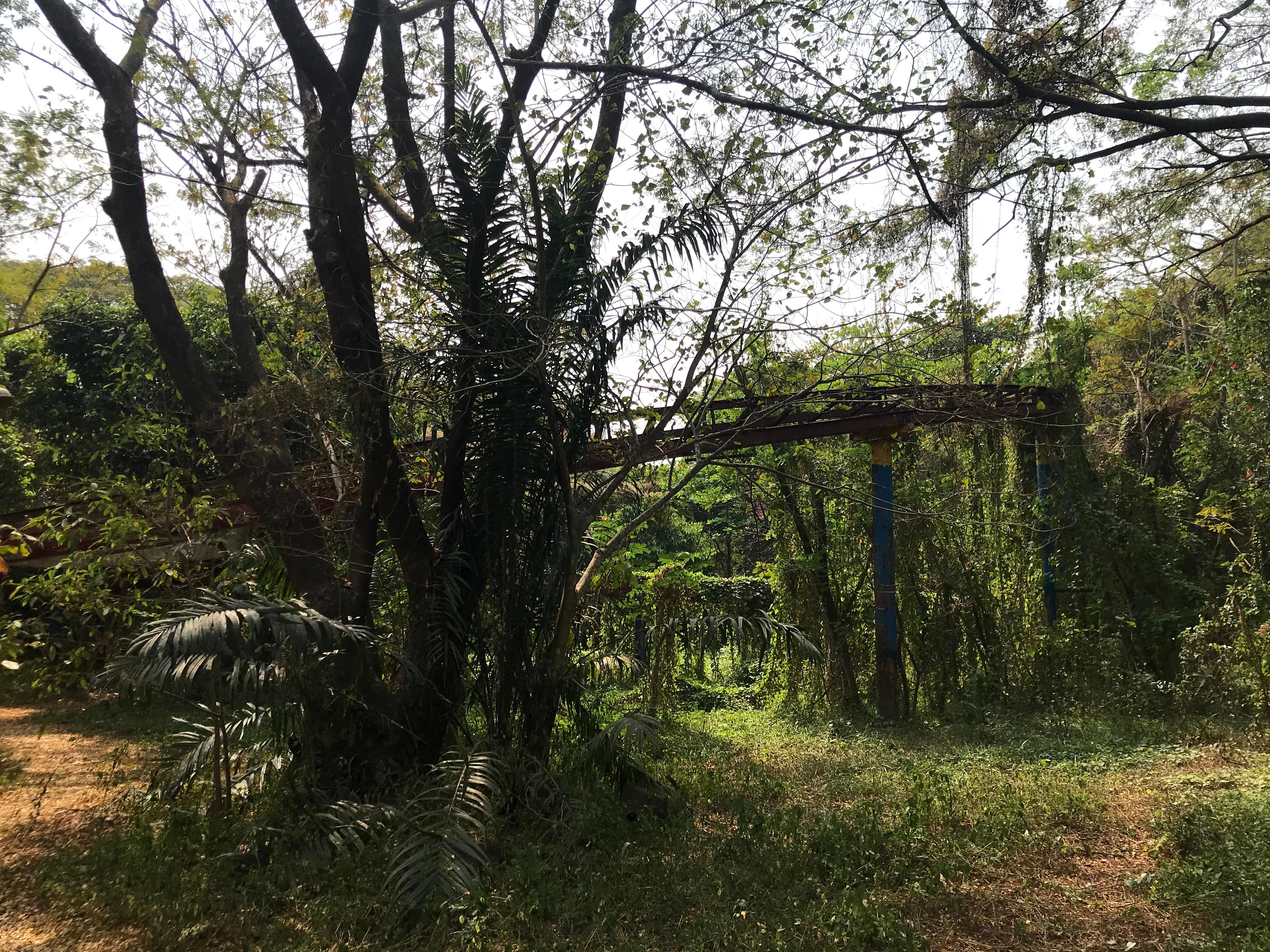
And it decayed quickly, with the tropical climate immediately leading to vegetation taking over everything. We had to see it for ourselves.
Finding Our Entry into the Park
My wife and I took a taxi to the area, then started our search. We walked up and down the sidewalks, waiting for foot traffic to disappear and looking for any type of entry point. The fence was too tall, with sharp edges on top. Parts of the fence did have holes, but nearby were buildings that seemed to be inhabited.
Finally, we came across a building sharing the fence’s perimeter. Many of the windows were broken, with glass waiting to slice up our legs. For the windows still intact, I tested each one to see if an unlocked option existed.
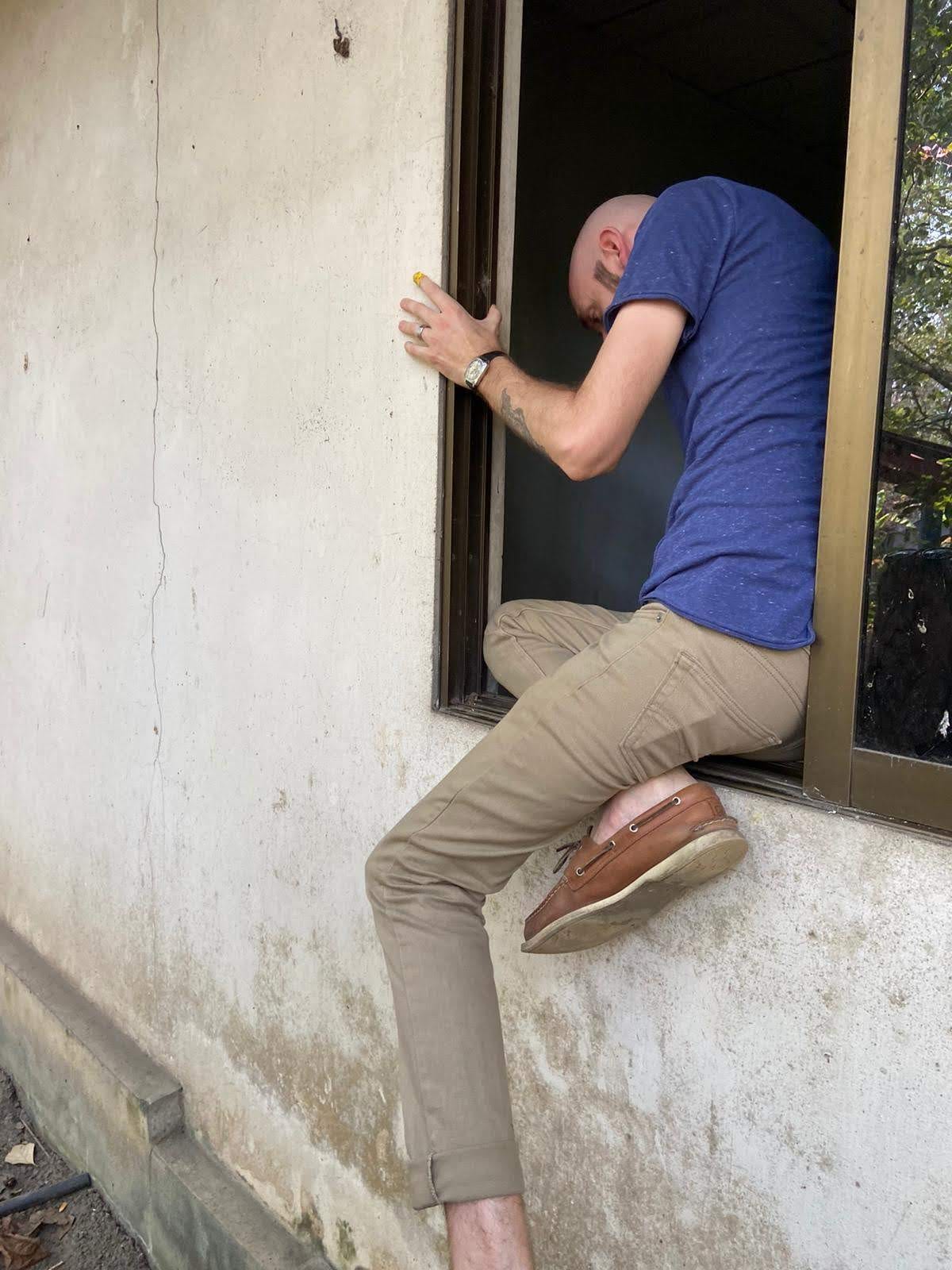
One finally slid open. I stuck my head into the window and looked around the room. Nothing to see, no people or pests. I climbed over the threshold, then helped my wife through the window as well. After a quick walk through the empty building, we found windows facing into the amusement park. One was open, so we used it as our point of entry.
Entering the Perimeter and Eerie Silence
Once we began exploring the park, there was an onslaught of creepiness. First, silence, an expected result of an abandoned anything. But then we heard children laughing, screaming, and playing.
Ghosts? Our first thought as well, but it turns out the zoo backs up to the abandoned park. Between the canopied fencing and vegetation, the zoo was invisible to our eyes but not our ears. The children’s noise battled exotic animals for who could be the loudest, who could scare us the most.
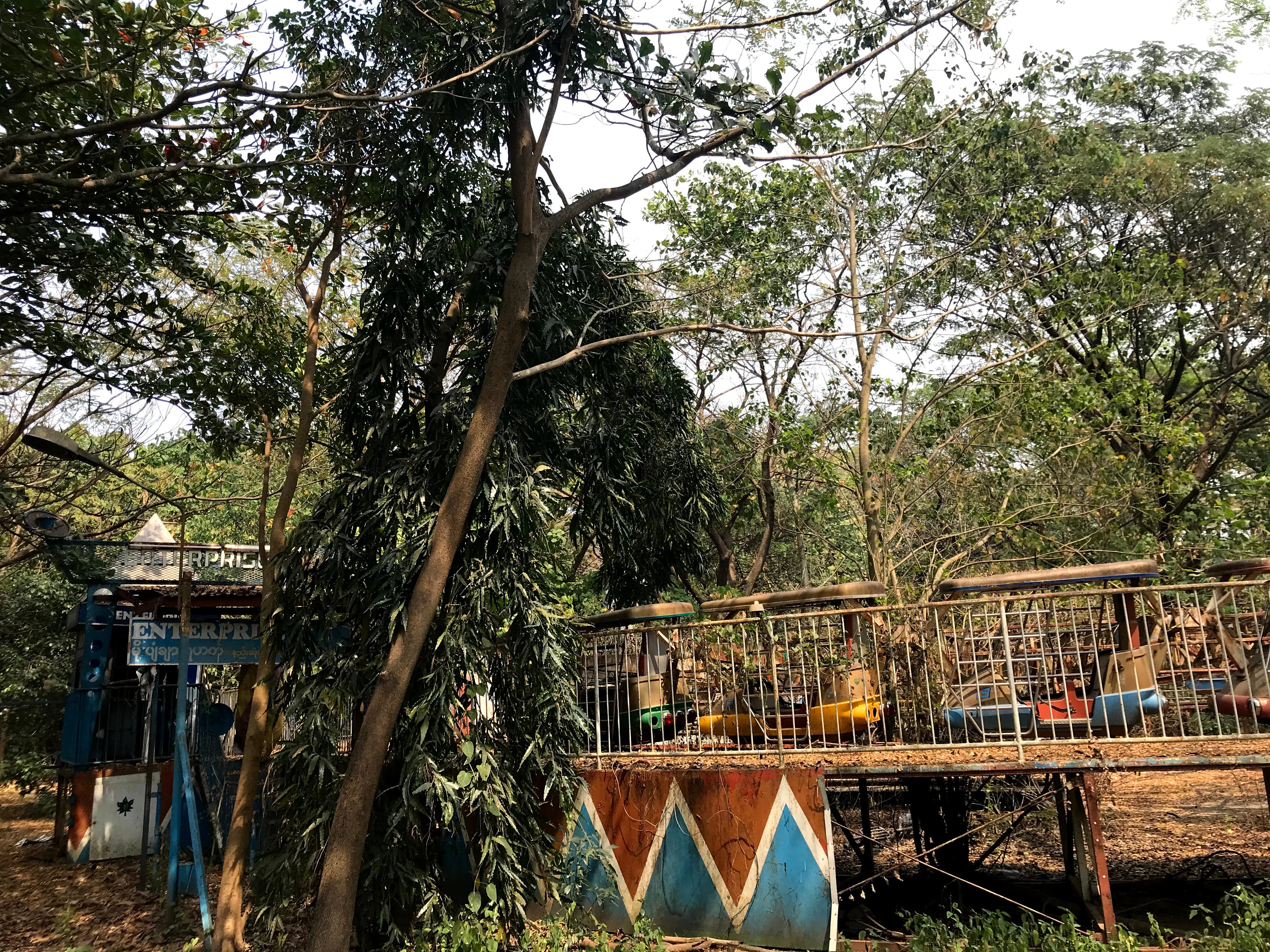
Having this soundtrack to the visual of abandonment gave us the feeling of hearing the past, hearing the ghosts of children and families trying to forget their lives that were controlled by oppressive governance, civil war, and unrest.
We continued our exploration.
Coasters, Rockets, and Shared Discoveries
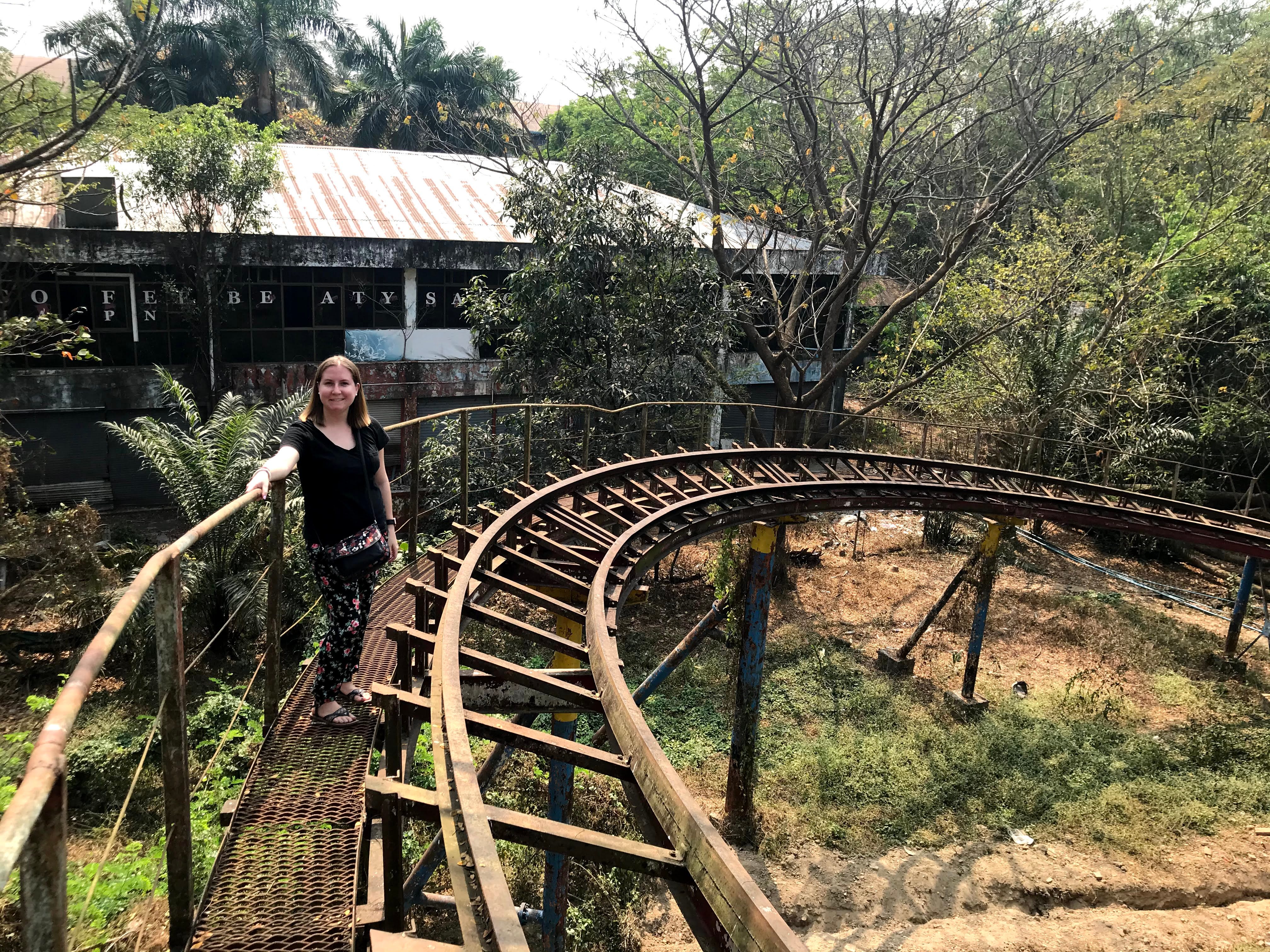
As we walked around the decaying rides, shuttered buildings, and grimy play areas, we saw many sights familiar to an amusement park. The major attraction was the rollercoaster and if one isn’t afraid of heights, walking up the structure gives an incredible view of the park and surrounding trees. It’s also a great way to scope out what the park has to offer, and what areas might be best avoided.
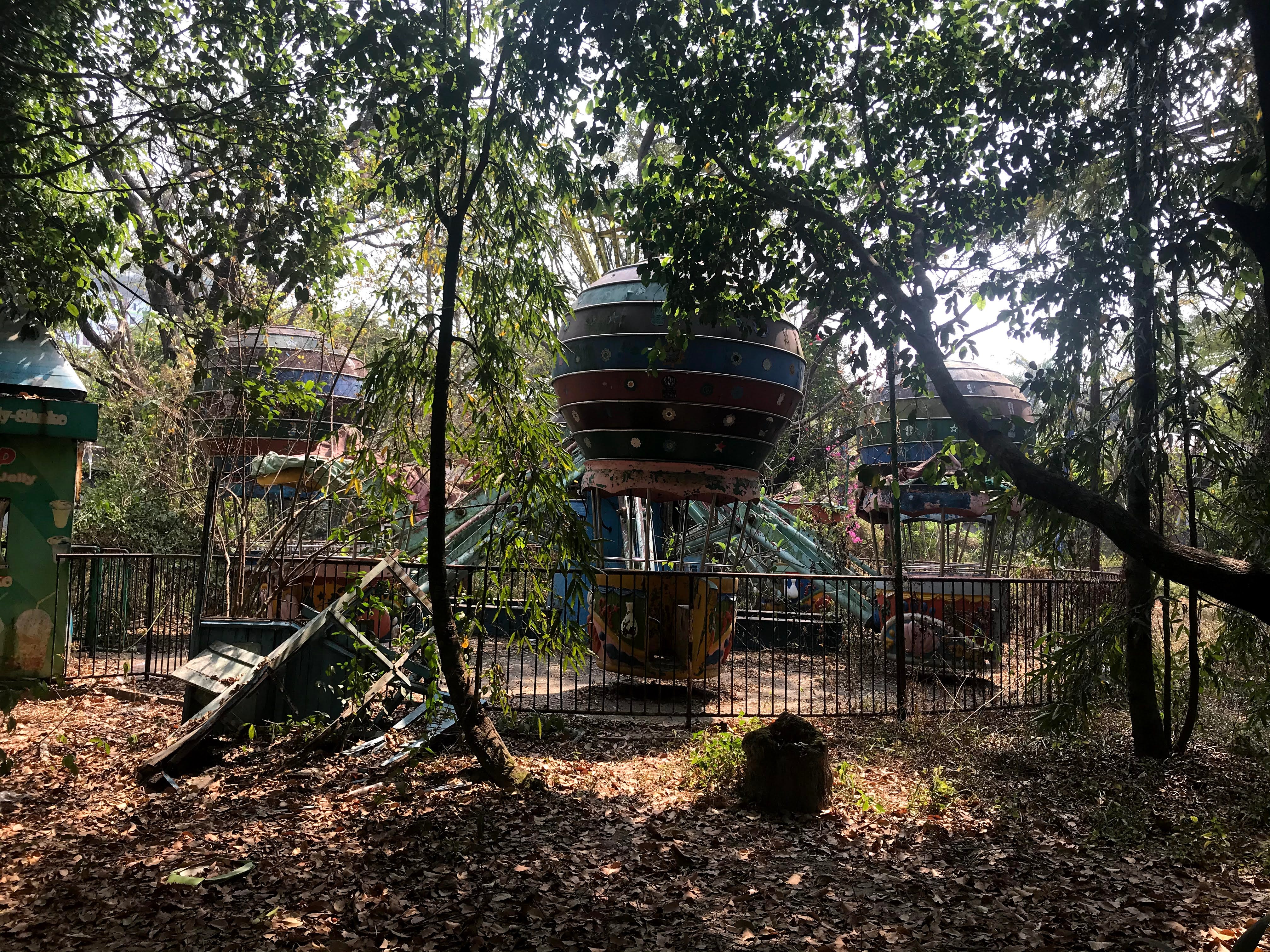
There was a carousel, two bumper car sections, ticket booths, and multiple other rides, both named and unnamed. We saw a ride with hot air balloons, one on a monorail with pedals to move the ride forward, and even a double-sided rocket ride with one rocket sticking high out of the treetops while the other is at ground level, leaning uncomfortably to one side.
In the mechanisms of some rides, we stumbled upon families of stray dogs. They seemed to ignore people well enough, but did get defensive of their territory at times. We decided it was best to let them be.
A Vanishing Capsule of Myanmar’s Complex History
After a few hours, we decided it was time to return to legality and a cold beer. A nearby hotel provided the drinks and the wifi while I continued reading about the park.
Supposedly, there are plans to demolish the current structures and rebuild a new amusement park, connecting it with the zoo and the rest of the park. Planned by the Amenity Design Group, there haven’t been any official updates since a Facebook post from May 2019 that I was able to find. Today, even that has been taken down.
As we wait for future changes, it looks like the days of this unique experience are numbered. For now, it stands as a physical footnote to Myanmar’s turbulent modern history; a rare place where political spectacle, human memory, and aggressive nature intertwine.
I don’t pretend to be a photographer at all, but if you want to see all the photos I took while there, check out this Google Photos album.